NYAS Policy & Research Intern, Lara Nelson, shares some reflections on the film ‘Lollipop’ and Panel Discussion in Parliament
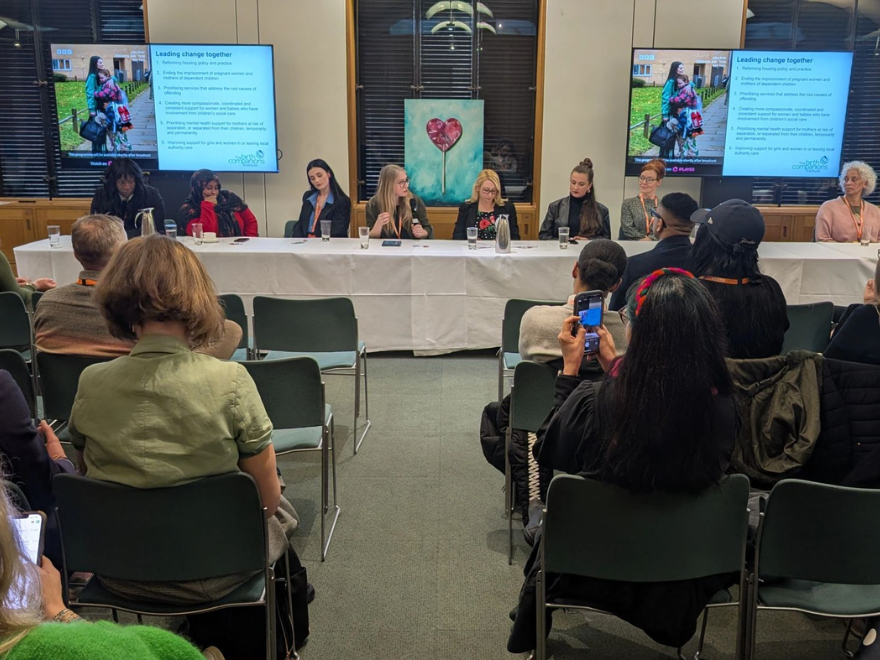
At the start of January along with NYAS, I attended a Parliament Film screening and panel discussion on social care and maternal imprisonment ahead of the release of the Film Lollipop. The event was hosted in partnership with Lollipop writer/director Daisy May Hudson, Birth Companions and Project Accountability. The award-winning film Lollipop shows the harsh realities of social care and maternal imprisonment. We watched short clips from the film which were extremely emotional and raw. What the film did highlight, and which was discussed by the panel, was how disjointed and extremely challenges social care and justice systems can be for women to navigate, especially alone.
The panel was made up of Jess Asato MP, Daisy May Hudson (writer/director of Lollipop), Kirsty Kitchen (Director of the Birth Companions Institute), and actresses Idil Ahmed, Posy Sterling, Sherma Polidore and Mandy Ogunmokun. The panel also included Emilia Rose Porter, who was a lived experience script consultant for Lollipop, and Service Manager at NYAS Kate Saunders. The founder of Project Accountability, Molly Ellis, was also a panellist. The discussions from all panellists were insightful and motivational to push for caring systems that break rather than perpetuate cycles of harm.
Both the film and the panel discussions in Parliament make evident that the current systems are failing women, and policy change is needed to improve experiences for women and their children. This can include deferred sentences so that pregnant women do not have to face imprisonment during a time of vulnerability. In addition, trauma-informed care needs to be implemented across all services to provide coordinated and effective support.
A key point in the film was the lack of support from the social care and housing systems when Molly had left prison, being told that she could not have her kids back without a large enough home - but could not get a home large enough without her kids. This felt extremely poignant to the cycles of trauma that women in prison often face. This uncertainty, and totally unfair explanation that Molly was given, highlights that the system fails to protect the vulnerable and shows how there is a clear cycle of uncertainty and trauma that we must change. This cycle of pain needs to be broken with policy change and the right people. If the system contradicts what it is saying, how are women in vulnerable situations that have just left prison meant to navigate themselves through it?
This links to the importance of parent advocacy. Kate Saunders was on the panel to talk about NYAS’s advocacy services in England. Parent advocacy is essential for the needs of imprisoned mothers or mothers of children in social care, as it allows for the mother to have support that is focused on only their needs, as well as having their voices heard within the system. They can get explanations around all of the steps they are going through, how to navigate systems and have a professional who is there for just them with a holistic understanding of what they are facing – something that Molly did not have in her story. This allows for the mother to feel supported and safe with an advocate that has their best interests at heart. In addition, parent advocacy helps women to meet reunification requirements and can be the difference between separation and family reunification. This is essential to help ensure women and their children are protected, and supports healing after what is often a traumatic experience.
To find out more about our parental advocacy services, visit our this webpage or call our helpline on 0808 808 1001.
Lollipop is available to watch on BBC iPlayer now!
.png)
